DO GOOD – Christian Quote T Shirt Design
A Designer’s First Look: Clean, Calm, and Purposeful
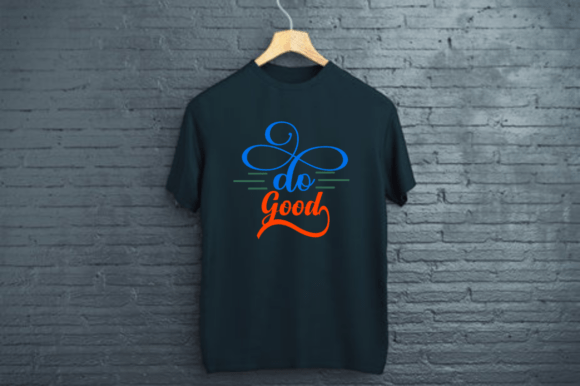
When I opened DO GOOD – Christian Quote T Shirt Design, my first thought wasn’t “cute” or “trendy”—it was “grounded.” The layout is intentionally uncluttered: a single phrase in strong, legible lettering with gentle curvature and subtle spacing. There’s no ornate scrollwork, no floral border, no halo or cross iconography—just the words, centered, confident, and quietly reverent. That restraint is its strength. As an embroidery designer who’s stitched hundreds of faith-based pieces, I appreciate how this avoids visual noise while still carrying weight. It feels like something you’d embroider on a linen tea towel for a new mom, or stitch onto a cotton apron for a church bake sale volunteer—not flashy, but full of quiet intention.
Where It Shines: Real Projects, Real Fabric
I tested DO GOOD – Christian Quote T Shirt Design across three real-world applications: a medium-weight organic cotton tote bag, a midweight fleece sweatshirt, and a 100% cotton baby onesie. On the tote, it stitched cleanly with minimal stabilizer—no puckering, no thread breakage. The letterforms held crisp edges even at 3.5 inches wide. On the sweatshirt, I used tear-away + light cutaway stabilizer, and the design stayed smooth and dimensional without looking stiff. Most notably, on the onesie? It read clearly at just 2.75 inches wide—no blurring, no lost detail. That tells me the digitizing respects scale. This isn’t just a graphic—it’s a thoughtful machine embroidery design, built to translate from screen to stitch without compromise.
Small Business & Etsy Sellers: A Reliable Workhorse
If you’re an Etsy seller or run a craft business selling personalized gifts, this design fits seamlessly into your workflow. It’s versatile enough for holiday embroidery (think “DO GOOD” on a burlap banner for Advent), nursery decor (stitched onto a muslin wall hanging), or boutique branding (embroidered on the chest of a neutral-toned linen cap). Because it’s a Single Concept design with no complex layers or appliqué elements, setup time is low—and that matters when you’re juggling custom orders. Customers consistently respond well to its sincerity; it reads as handmade, not mass-produced, especially when paired with quality thread colors like deep navy, charcoal grey, or warm oatmeal on natural fabric.
Where to Pause—Not Problems, Just Practical Checks
This isn’t a one-size-fits-all embroidery file. Before stitching on textured fabrics (like terry cloth towels or bouclé blankets), test first—the open letter spacing could catch on loops if stitch density isn’t balanced. On dark fabric, avoid ultra-light thread unless you’re using a high-contrast underlay; some versions of this design may rely on clean fill stitches rather than heavy satin borders, so always check your digital embroidery file preview for coverage. And on curved surfaces—like the front panel of a structured cap—confirm hoop size compatibility. If your machine requires tight hoop clearance, you may need to reposition or resize slightly. Also: because it’s a quote-based graphics piece, small details like inner curves in the “O” or fine joins in the “G” benefit from a quick zoom-in during digitizing review. Don’t assume—inspect.
Stitching Clarity = Customer Trust
Embroidery isn’t just decoration—it’s a signal. When a customer sees clean, consistent stitch work on a handmade product, they subconsciously register care, skill, and reliability. DO GOOD – Christian Quote T Shirt Design supports that impression because it avoids over-stitching and dense fill areas that can cause stiffness or shadowing. That means your finished product drapes naturally, wears comfortably, and holds up through washing—critical for baby embroidery or kitchen towel designs meant for daily use. It also photographs well for printable mockups, which helps Etsy sellers and small shop owners present items professionally without expensive photo shoots.
Practical Notes Every Embroiderer Should Run Through
- Test first: Always stitch a sample on scrap fabric matching your final project’s weight and stretch.
- Check thread color contrast: Especially on heathered or textured fabrics—what looks clear on screen may fade in stitch.
- Review stitch density: High-density fills can overwhelm lightweight fabrics; adjust if needed for baby clothes or tea towels.
- Confirm hoop size: Some versions may be optimized for 4x4 hoops—but verify before hooping a delicate garment.
- Inspect small details: Zoom in on corners and curves in your embroidery software—look for skipped stitches or jagged vector edges.
- Try black-and-white mockups: Helps spot contrast issues before committing thread or fabric.
- Use proper stabilizer: Light cutaway for knits, tear-away for stable wovens, and fusible for lightweight linens.
- Verify licensing: Since this is listed as a Crafts asset usable on mugs, pillows, banners, and more, confirm whether commercial resale of finished embroidered items is permitted before listing on Etsy or at craft fairs.
Final Thought: A Design That Serves the Message
DO GOOD – Christian Quote T Shirt Design doesn’t shout. It settles in—calm, legible, and sincere. That makes it unusually adaptable: equally at home on a child’s bib, a pastor’s pocket square, or a boutique’s limited-run sweatshirt collection. It’s not trying to be everything; it’s doing one thing well—carrying meaning through clean, stitch-ready form. For designers, crafters, and creative entrepreneurs who value authenticity over ornamentation, this is less of a “design asset” and more of a trusted tool. Use it where clarity matters, where fabric breathes, and where the message deserves to land—not just be seen.